 BEST OF PHILLY® 2026 WINNER FOR BEST HOME STORAGE



Moving into a smaller home comes with its own set of challenges. It isn’t just about what fits. It’s about what stays, what goes, and how the new space works once everything is in place.
To get a clearer picture of what that process really looks like, we spoke with Holli of Sterling Home Services and Steve, a designer at The Closet Works, about what homeowners can expect when downsizing and how the right support and storage can make the transition more manageable.

The Reality of Downsizing
A standard move comes down to logistics. You pack, load, unload, and unpack. It can be exhausting, but the process is usually straightforward.
Downsizing asks harder questions before the packing even begins.
“With a downsizing move, the sorting and decision-making begins months beforehand and continues until it’s time for the move,” Holli explains. “This can lead to a great deal of fatigue since it seems like it never ends and is compounded by the emotional nature of the work.”
That emotional weight often catches people off guard.
“I think many people underestimate the impact of the memories they’ll encounter once they begin to downsize,” Holli says. “They may know a particular closet is full of things that need to be cleared out, but they’ve forgotten what’s inside and are met with a flood of memories once they dig in.”
What looks like a simple sorting project can quickly turn into a long series of personal decisions. Photos, clothing, china, glassware, and other family items may no longer be used every day, but that does not make them easy to release.
Holli sees that most often when clients feel an obligation to keep things that belonged to other family members. The items themselves may not have a clear place in the next home, but the attachment around them can weigh heavily.
That’s where professional support can help. For Holli, that support starts with trust. A Move Manager takes time to understand the current home, the client’s goals, the obstacles, and the worries before building a step-by-step plan around the move.
The client stays in control of the decisions. The Move Manager helps create the structure to carry them out.
Where People Get Stuck
Even with a plan, downsizing can lose momentum quickly.
“The toughest part of downsizing can be sticking to the plan,” Holli says. “Finishing one area before beginning another is critical, but it’s very easy to get sidetracked. When that happens, you end up with several areas in progress while none are finished. It creates a feeling of chaos.”
That chaos becomes harder to manage when the homeowner is also handling the sale of a house, inspections, repairs, financial decisions, and everything else that comes with a major move.
A Move Manager helps keep the process moving while the homeowner focuses on the pieces that need their attention most.
There’s also the family side of downsizing. Decisions about what to keep, sell, and donate do not always go smoothly when multiple people are involved.
“Move Managers can prevent family conflict by de-escalating disagreements and providing an objective perspective,” Holli explains. “Move Managers provide guidance to families as they decide which things to keep, sell, and donate.”
In other words, the support is not only about getting through the checklist. It’s about keeping the process from becoming more stressful than it has to be.
What Happens Once the Move Is Over
Getting everything into the new home is only part of the transition. The next challenge is making the space work for everyday life.
For Steve, one of the first places that tension shows up is the primary closet.
“Main clothing closets are the main pain point for people moving into smaller homes,” he says. “Smaller rooms and less closet space means we are tasked with figuring out how to account for everything.”

He sees the same issue in rooms and closets that are suddenly expected to do more than they used to. An office may also need to function as a guest room. A hallway closet may need to absorb overflow from several parts of the house. In a larger home, linens, seasonal items, extra clothing, and household overflow may have had separate places to land. In a smaller home, that extra buffer can disappear.
That’s where Steve says standard storage can start to fall short.
“Creative and flexible organization is crucial so that all items can be accommodated,” he explains. “Some rooms or closets will be pulling double duty, so storage solutions from a store aren’t well-suited to meet those needs.”
The issue isn’t just whether there’s enough shelving or bins. It’s whether the storage fits the room, the routine, and the belongings that still need a place to land.
Even after careful decluttering, some items lack a proper home. Custom storage helps make the transition more intentional instead of relying on temporary fixes after the boxes are already unpacked.
Making a Smaller Space More Functional
For Steve, the design process starts after the hardest decisions have already been made.
“I will usually work with a customer after they have gone through the decision-making process around what they will be keeping,” he says. “That helps guide the design to focus on only the most important things.”
From there, the design is built around the purpose of the space.
“There is no one-size-fits-all solution,” Steve explains. “You have to make the best use of every inch of space. When storage is specialized, there is less wasted space.”
That doesn’t mean forcing more into the room. It means making smarter use of the space that’s already there.
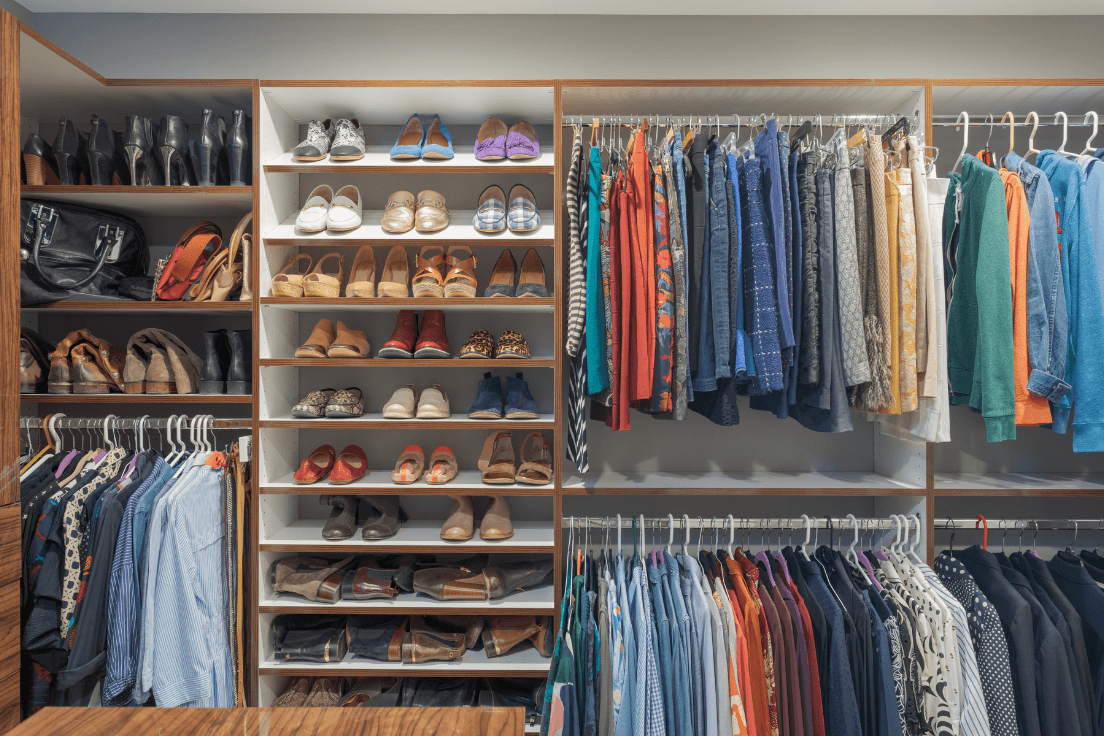
A standard closet layout shows how quickly space can get wasted. Many are built with too much long-hang space and not enough storage for folded items, smaller pieces, or daily essentials. Converting some long-hang sections to double-hang can increase usable capacity, while built-in drawers can reduce the need for a bulky bureau in the bedroom.

Steve also points to integrated hampers as a practical detail that can free up floor space and keep the room easier to use.
As he puts it, the right proportions can make “the difference between used and wasted space.”
The right design is not just about adding storage. It’s about putting the right storage in the right place, so the home supports the routines that happen there every day.
Where Sterling and Closet Works Come Together
The strongest collaboration happens before the homeowner is fully settled in.
Holli recommends bringing in a storage designer once the new home has been identified and a floor plan is in hand. At that point, the homeowner can see which furniture will fit, how the space will function, and how much closet or storage space is available.
“Once a client has identified their new home, a Move Manager will help them develop a floor plan which maps out which furniture will fit in the new space,” Holli says. “This process also reveals the amount of storage and closet space available and allows the client to envision how they might make the best use of their new space.”
That information gives The Closet Works a stronger starting point.
“A move manager sets our customers up for success by helping them determine what they will be bringing to their new home,” Steve says. “With that knowledge, we can effectively create a space for all of their belongings.”
That makes the design process more practical from the beginning. The Closet Works is not guessing at what might need storage. The design can be built around what is actually coming into the home and how the homeowner wants to live in the space.
Start Smaller Without Feeling Limited
Downsizing doesn’t have to feel overwhelming. With the right support from Sterling Home Services and tailored storage solutions from The Closet Works, homeowners can move into a smaller space with more clarity, less stress, and a setup that works for how they live from day one.
Whether you’re planning a move, settling into a new home, or realizing your current storage isn’t keeping up, our team can help you make the most of the space you have.
Book your free design consultation with The Closet Works today.